
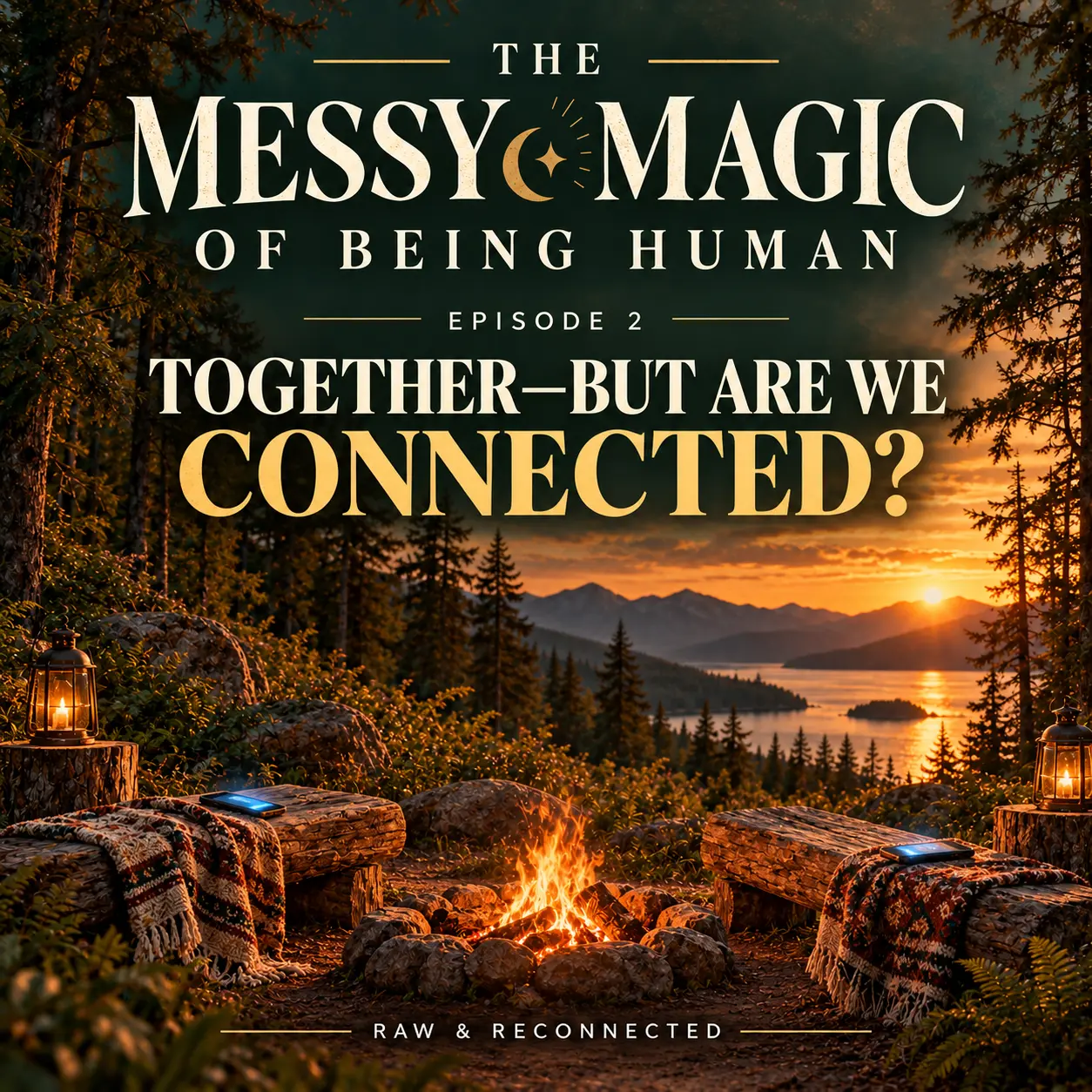
You can be inches away from someone and still feel like they are somewhere else entirely.
You know the scene. Two people are sitting on the same couch. Maybe the television is on. One person is checking messages. The other is watching videos. Someone laughs at something on a screen, but the person beside them has no idea what was funny.
Technically, they are spending time together.
But are they actually together?
This is not a “phones are evil” lecture. Phones help us work, learn, find community, stay safe, maintain friendships and survive the occasional family group chat. The problem is not that we use them. The problem begins when divided attention becomes the default way we exist beside the people we care about.
Attention is a form of connection
Our brains are constantly scanning for information: What matters? What needs my attention? Am I safe here? Do I belong? When someone turns toward us, looks up and responds, our nervous system receives a small message: I am here with you. You matter in this moment.
When attention is repeatedly pulled away by notifications, scrolling, work messages or one more video, the other person may receive a very different message—even when that was never the intention.
“Intimacy doesn’t always begin in the bedroom. Sometimes it begins when someone finally feels like they have your full attention again.”
Most disconnection is not created by one dramatic moment. It grows through hundreds of tiny missed opportunities: the story that receives a distracted “uh-huh,” the facial expression nobody notices, the hand that reaches out while the other person keeps scrolling, or the conversation that never begins because both people are mentally somewhere else.
The brain loves what the phone offers
Phones provide novelty, predictability and escape all at once. There is always something new to see, but we also control when we look, what we open and when we leave. Real human interaction is messier. People pause, misunderstand us, need things, disagree, or bring up emotions we do not feel ready to handle.
When we are tired, stressed, overstimulated or emotionally uncomfortable, the phone can become an easy exit ramp. That does not make us terrible partners, parents or friends. It makes us human beings whose brains have learned that a screen offers quick relief.
For neurodivergent people, phones may also provide regulation, recovery from social demand, focused interest or a more comfortable way to communicate. The goal is not to shame the tool or demand constant eye contact. The goal is to get curious about when technology supports connection—and when it quietly replaces it.
Being ignored and being regulated are not the same thing
Not every moment beside someone needs to involve conversation. Healthy relationships need parallel time too: reading different books, playing a game, answering messages or simply decompressing in the same room.
The difference is usually awareness and agreement.
“I need twenty minutes to shut my brain off, then I want to hear about your day” feels very different from disappearing into a screen while the other person waits and wonders whether they matter.
That is where digital consent comes in—not as a rigid rule, but as a conversation. What does connected time look like for us? When is phone use completely fine? When do we want to protect our attention? How should we signal that something is important?
Phones can become the third person in the relationship
Sometimes the phone begins to occupy space that used to belong to the relationship. It comes to the dinner table, into bed, on dates, into difficult conversations and into the few quiet minutes that might otherwise become closeness.
Then people often blame themselves for the distance. They assume they have become boring, undesirable or needy. They may stop reaching out because repeated half-attention starts to feel like rejection.
This can affect friendship, family life and parenting just as much as romantic relationships. Children notice when a screen receives the face, voice and enthusiasm they were trying to reach. Friends notice when every vibration interrupts the conversation. Even our relationship with ourselves changes when every quiet space is immediately filled.
This is not about perfect phone habits
The answer is not creating a household where nobody is allowed to touch a device without being judged. Shame rarely creates sustainable change. Curiosity does a much better job.
Try asking:
- When do our phones genuinely help us feel connected?
- When do they make one of us feel alone?
- Do we use screens to avoid tension, boredom or vulnerability?
- What moments do we want to protect from interruption?
- How can we ask for attention without turning it into an accusation?
“You are always on your phone” invites defence. “I miss you, and I would love twenty minutes where we are both really here” reveals the need underneath the frustration.
Try this tonight
The twenty-minute connection experiment
Put both phones somewhere out of reach for twenty minutes. No punishment. No scorekeeping. No expectation that the conversation must become profound or sexual.
Ask one another:
“What has been taking up the most space in your mind lately?”
Then listen without fixing, defending or preparing your own response. If twenty minutes feels like too much, begin with ten. The point is not the timer. The point is practising the experience of turning toward each other again.
Connection is built in small returns
You do not need to throw your phones into the lake. You do not need to become perfectly present every time somebody speaks. You need moments of return.
Look up. Notice the person. Finish scrolling, put the device down and come back. Say, “I realize I wasn’t listening. Can you tell me again?”
Those small repairs matter. They teach the nervous system that distraction does not have to become abandonment and that missed connection can be followed by reconnection.
Two seats can hold two separate worlds—or they can become a place where two people find their way back to one another.
Stay curious. That’s where the magic begins. Because this imperfect work of losing attention, noticing and returning is part of the messy magic of being human.